The second week of quarantine in early March, two years, um, months ago, the sound on the television in our living room went out. The picture was fine – just no sound. Now let me preface this story with the humbling confession that my dear wife and I are woefully inept when it comes to any repairs of a technical nature. In short, there will be cussing (mine) and there might be tears (both).
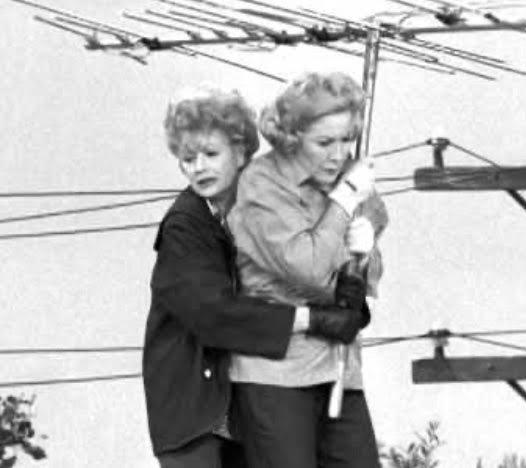
Me and my wife attempting to fix our soundless TV.
So, I made the dreaded call to Spectrum and went through the automated menu to learn that there were no outages reported in my area. Thanks. Then I held and held and held to talk to a human who walked me through refreshing (stupid word for unplugging everything) my TV. Yep, still no sound. The same thing happened a few months ago and we were told it was probably a bad cable and we should use another cable outlet for the audio. Somehow, we managed to do this, and sound was restored.
I would rather have a root canal.
No such luck on this Sunday morning. I had purchased a new cable cord to have on hand for such a situation, so we entered the Black Hole of Cords behind the television set. Of course, there’s only room for a small child (and lots of dust) behind there, so that only adds to the frustration. We tried what felt like 101 variations of plugging things in to no avail. And then we did what so many good people who had gone before us have done – we gave up. Yep. We made a conscious decision that our marriage was more important than the sound on our TV and I feel pretty good about that.
Full disclosure – this situation was not as dire as it might have been. The sound on our Roku worked just fine so our streaming lives were saved. We hardly ever watch anything on regular TV anyway – except sports (me) and MSNBC (me). My wife enjoys some HGTV when she has a rare break from her live-in program director (me).
So, we really haven’t been all that inconvenienced by no sound on our TV and in the case of Trump’s Coronavirus Task Force briefings, it has been a true blessing. I started “watching” them on Twitter so I would not miss anything important like what a great job he is doing and where to insert my glow stick if I begin to feel ill.
And just the other day, I realized that a television with no sound is the perfect metaphor for this pandemic. We can see, but we really have no idea what is going on. And we can try and change the channel, but the result is still the same – nothing. Most of us are sitting at home anxiously waiting to hear what the new not normal normal will be. We see talking heads and fancy graphs, but we aren’t hearing what we long to hear… “It’s going to be okay.“
Crickets.
So, we return to the Neverland of Netflix where people are still going out to dinner and hugging their friends and getting on airplanes to go to beautiful places.
Damn. We may never get that TV fixed.
Now streaming. No social distancing for the Monterey Five. Just be careful when you take the steps.
“Doubt requires more courage than conviction does, and more energy, because conviction is a resting place and doubt is infinite – it is a passionate exercise.”
~ John Patrick Shanley
Maybe that is why we are all so tired these days. Blame it on doubt. I usually blame it on the current occupant of 1600 Pennsylvania Ave. – and you can certainly connect the dots on that one, but I’m doubling down on doubt today. We are living in a constant state of uncertainty and it is absolutely exhausting.
Some days I feel like I’m on a moving walkway at an airport. You remember airports, don’t you? Anyway, I have my suitcase and I am making my way to my gate – only I don’t know where my gate is. In fact, I have no idea where I am going. I don’t even have a ticket, but it doesn’t really matter because the walkway never ends. It just keeps moving forward into the unknown.
This is life in a global pandemic. A one-way ticket to uncertainty. Who the hell knows what to pack? Besides lots of snacks, of course. No kidding, this is hard and the reality of it sent me into the dark hole of despair this week.
I have written before about my superpowers of denial, but they dissolved this week. I’m sure it was the cumulative effect of everything most of us are dealing with – fears about our health and our loved ones, fears about security, fears about what the future will look like when the gates open again.
Putting the COVID-19 smorgasbord of anxiety aside, there were two things that happened this week that made me feel the brutal reality of this pandemic in my gut. The first, innocently enough, was a virtual vestry meeting after a Zoom worship service on Sunday. In the Episcopal church, my church, the vestry is like a board of directors – conducting parochial business. We normally meet once a month, but since the quarantine in early March, we have been connecting weekly.
We divided up the church directory and each vestry member has been responsible for checking in on parishioners. Each week we spend the top of our meeting with updates and last Sunday, our rector told us that she had heard from some older members of our parish that they won’t be returning to the physical church until there is a vaccine. Lysol and grow lights aside, the most optimistic projections for a vaccine are a year or more away. Believe me, I want these dear wise owls at my church to stay home and safe, but I just can’t imagine not seeing them in person for that long. Damn you, reality.
The other event that leveled me was more of a Six Degrees of COVID-19. My sister, who manages some oncology clinics in East Bay, CA, had to inform her staff of a 20% pay cut. The freeze on elective surgeries during this pandemic has left medical providers reeling from a revenue perspective. She also had to lay off some temporary staff, including a cheerful young man who has been living in his car. Cue gut punch.
My sister had told me about this man weeks ago – how earnest and kind he was and how much he appreciated his job. He worked at the front desk and greeted everyone enthusiastically. He had shared his housing situation with my sister and she and her assistant were able to discreetly help him with some new clothing and toiletries. She dreaded giving him the news earlier this week and when I talked to her that evening, I asked her how it went. She said the young man said, “Thank you for this opportunity. I’ve learned so much.” True story.
I got off the phone with my sister and sat down in the chair in my office in the dark and I wept for a young man I will never meet. To be honest, I also wept for my denial. It was shattered, crumbling like a piece of fine crystal being tapped with a hammer. It was my pandemic tipping point.
There is no denying the uncertainty in which we are all living. 50,000 dead and counting as I write this. A friend shared the tweet below with me and it made me feel better – to know that someone else was feeling this way.
I imagine a lot of people are feeling this way and you know what? It is okay to feel that way – anyway you are feeling about all of this. Anxiety, fear, grief, anger – we need to feel it. One of the truest things I ever read was Joan Didion’s The Year of Magical Thinking – her stunningly raw account of her husband’s sudden death and how she navigated that first horrible year without him. She writes that “grief turns out to be a place none of us know until we reach it.” That, my friends, is as real as it gets.
I have been grieving the things I miss in this beautifully broken world and I am grieving the loss of certainty. The late Jane Kenyon is one of my favorite poets and I have found myself returning to her words again over the past several weeks. Her poem Otherwise is an achingly lyrical appreciation for the here and now and a haunting lamentation on uncertainty. I’ve been reading it a lot on the walkway. Hang on to your boarding pass and your humanity, folks. This could be a long one.
I’ve never really enjoyed grocery shopping, but COVID-19 has made me approach this ordinary task like a Navy SEAL. Gone are the days of just running in to pick up something. Grocery shopping today requires strategy – and PPE. Have mask, will shop.
So, I set out yesterday morning and went through my litany. List. Check. Wipes. Check. Sanitizer. Check. Anxiety. Check. I arrived at Trader Joe’s shortly before nine. Shout out to TJ’s – they have done an excellent job of adhering to safe distancing guidelines. There are blue tape strips on the sidewalk outside the store marking the magical six feet and they have a traffic controller outside only allowing so many people in the store at once. Meanwhile, another employee is constantly sanitizing carts. Once in the store – you’ll see more blue strips, reminding you to stay in your lane.
Trader Joe’s is bringing a strong virus game.
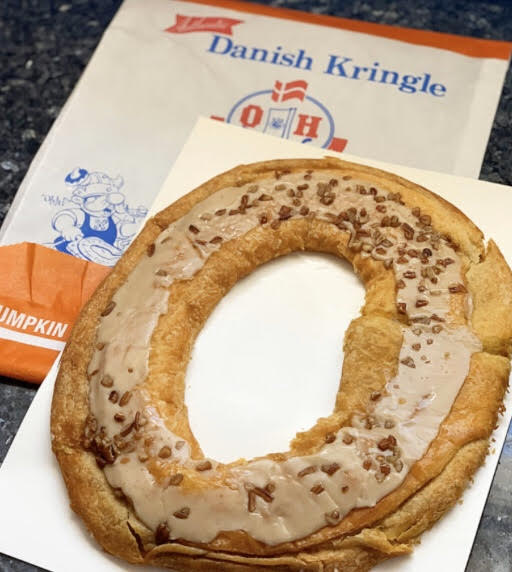
No one looks like they’re enjoying their outing. There are plenty of awkward moves as folks try to avoid each other while snagging a beautiful avocado. Things get a little more tense when you approach the bin where the highly sought after Danish Kringle resides. Behold the Kringle, a sinfully delicious Scandinavian flat ring of pastry. Trader Joe’s Kringle even has a calendar. True story – the flavors change every quarter and the most popular one, almond, comes out after Thanksgiving. I’m grateful that the COVID-19 Kringle is raspberry – not my favorite so no reason to risk my life to grab one.
Kringle. It’s not just for Christmas, but pandemics, too!
I got the essentials – Greek yogurt, hummus and wine. And maybe some more wine. I head to the checkout and find myself behind a very elderly woman. It was a warm and sunny morning, but she was wearing a teal raincoat and had a floral scarf wrapped around her head (not her face). And she was wearing sunglasses. Think Little Edie without the cats.
Her cart was full of various canned goods – beans and tuna and such. She asked the cashier to give her a running total of what she was purchasing. Yes, I had definitely picked the wrong line (per usual) and as I rolled my eyes, I surveyed an escape route. I decided a pandemic is no time to be changing lines and took a deep breath. I must remind myself to do this several times a day now.
Meanwhile, the cashier was patiently and kindly calling out the total to Edie. When the grand total was announced – something close to $60, Edie started pulling out items for the cashier to remove from her bill. Clearly, she had a budget and she was not going over it. I thought for a moment of offering to pay for the discarded items, but there was the bold blue tape reminding me to stay where I was, and I wanted to respect this woman’s space and privacy. Once she got within her budget, she pulled out a roll of paper bills from her pocket. I’m pretty sure I gasped. Paper bills! Surely that’s where COVID-19 goes camping. The sweet cashier (who was wearing gloves) never missed a beat as she counted the multiple bills and gave the woman her change.
Edie didn’t want her items bagged – she told the cashier that she had plenty of room in her trunk. Then the cashier thanked her – again, most cheerfully – and told her she hoped she would enjoy the beautiful day. I was mesmerized by her genuine benevolence to this rather eccentric woman. Surely it could have gone another way with a different cashier.
She greeted me and I took my place in front of her plexiglass shield. And then I heard my own muffled mask voice speaking to her, “You were so kind and patient with that woman. You are a lovely person.” Once it was out, there was nowhere to go. She looked at me a bit surprised, but not startled and as she started to respond to me, I could tell she was tearing up. She said, “That is such a nice thing for you to say. Thank you.” And then I teared up and we both looked at each other through our masks and the plexiglass and into each other’s eyes. And I knew that she was smiling, too. It was the most intimate moment that I’ve experienced during this wretched quarantine. It felt like the passing of the peace.
Two strangers sharing communion through the plexiglass of a pandemic.
I’m fairly certain this is how we save each other.
It found me at Trader Joe’s and took me to a place I was longing for.
Do you want to Zoom? After “What’s for dinner?”, this is perhaps the number one most asked question during this COVID-19 quarantine. Kids do it, grandparents do it, even educated nerds do it. Seems like everyone’s doing it, but that’s not necessarily a good thing. Bless their hearts.
SNL comically captured this Zoomundrum on this past Saturday night’s digital episode. In a skit, co-workers, including two women who serve as support staff, hilariously portrayed by Aidy Bryant and Kate McKinnon, connect on a Zoom staff meeting. They are Zoom virgins and their discomfort and fear with the technology is palpable. At one point on the call, Bryant’s character carries her laptop into the bathroom – not knowing that she is still on camera. Watch it on YouTube and thank me later.
Now let me be clear – I am far from technically savvy, so I’m not throwing any cyber stones here. I’m just making a few observations and trying to get your mind off what you’re going to make for dinner. My community service during the time of plague if you will.
So, here are a few personas I have observed in my glut of Zoom gatherings:
The Newbie. This person is taking the plunge because someone they love asked them to, but they are clearly out of their comfort zone. Once they enter the Zoom room, they have a panicked look on their face – like they’ve gotten on the wrong flight. Their eyes are darting around all over the place as if they’re looking for the exit door. The first words they utter are usually, “Am I on?”. When someone answers them, they almost jump out of the screen as if they’re hearing the voice of God. It’s okay, newbie, everyone remembers their first time.
The Hostage. This Zoomer acts like they are being held against their will. They slip in without saying anything and are usually sitting in dim lighting in a room normally reserved for storage – like you can see the tubs of Christmas decorations in the background. They rarely participate and sometimes even forget to blink. They can’t wait for the meeting to be over.
The Showoff. You know this person. They’ve downloaded all the “cool” Zoom backgrounds because well, this isn’t their first Zoom rodeo. They just can’t wait for someone to comment on their backdrop and gush about how clever they are. I find these backgrounds disturbing. I was on a Zoom with a guy who had the Golden Gate Bridge as his backdrop, and it looked like he was going to jump. Very distracting.
The Chatterbox. It doesn’t matter if this person is in a room with you or a Zoom with you – they are always going to talk the most and interrupt the most. And annoy you (okay, me) the most. Pro tip: Eye-rolling must be nuanced on Zoom – never forget that the camera is on.
The Unmutable. This is often a subset of the Chatterbox. This person is oblivious to the mute button and will often provide unnecessary – and unwanted – commentary on whatever the center square is saying. They also often tend to ignore the other folks on the meeting who are pleading, “Mute your mic!”. I think it’s fine to throw in a quick on-screen eye-roll if they continue to not mute.
Insert eye-roll.
The Family Guy. This dude is quarantined with a large family and thinks the best place to log on is the kitchen table, so we get to see his cranky kids and black Lab running in and out of the screen frame. The dog is adorable, but stay in your square, man!
I’m personally not accepting that many Zoom invitations. And, no, it’s not because I’m 100% that bitch. My dear wife is a psychotherapist and has been seeing her clients via teletherapy for the past month. We live in a 1,200 sq. ft. condo and her new office is our dining room table. It has been a stressful transition – for her, for me, and for her clients – many of whom are older and not used to such technology. God bless ‘em for being game for keeping their appointments. Sometimes it takes a while to get them connected, but everyone seems to be getting with the new normal as the days go by.
The therapist is in. So is her new Office Manager.
My wife is the poster girl for Good Boundaries (something I deeply admire about her) and we are strictly adhering to HIPAA guidelines. She has a white noise machine she has running during her appointments and if I’m home – I’m in my office with my headphones on. Our cat has tried to interrupt a few sessions, but she isn’t one to talk out of school. That said, I have enjoyed hearing some funny stories when my wife is done with work. A few weeks ago, she called a client who had not logged on for her appointment. The client answered the phone and when my wife reminded her of the appointment she said, “Oh, yeah, but I’m not wearing a shirt.” True story. Note: She found a shirt before she logged on.
Headphones on. Check. Shirt on. Check.
At the end of the day, my wife is absolutely fried. She thinks teletherapy is more difficult than in-person therapy for a myriad of reasons, but she’s profoundly grateful that she can continue doing her job during this pandemic. And I feel really good about her job security since I think therapists, after hairdressers, will be the busiest people once we are released from our COVID captivity.
The last thing she wants to do after work is join a Zoom anything. She often takes a walk or steps outside for some fresh air. We both enjoy the silence at the end of the day and a no screen zone for a bit. And then we’ll have some dinner and relax with a nice Netflix drama about serial killers.
I appreciate that Zoom has been vital to enabling people to do important things from home – work, worship and stay connected to family and friends, but I find myself defaulting more and more to old school communication as this pandemic wears on. I’ve always been a note writer, but I’m rapidly depleting my robust stash of cards and stationery. There’s something so intimate to taking pen to paper to communicate with another human being. And isn’t it nice to get something in the mail besides a bill?
This post card from an anonymous human from my church made my day last week.
I’ve also been reminded that my phone can be used for something besides texting. The other day, I was on the phone with my best friend from college for almost two hours. I was aware that my right ear was getting kind of hot, but I had absolutely no idea we had been talking for that long. It was delicious and I felt so much lighter after our conversation. She lives in Berkeley, CA and has been living in quarantine since early March. The reality of COVID-19 is much closer to her and I am reminded to be grateful that NC is weathering this mighty storm pretty well.
Maybe Zoom is working for you and if it is, that’s great. I just know that I need to connect in a more visceral way with the people I care about. Here’s the thing, it doesn’t matter how you do it, just stay connected – to others and your own humanity. At the end of the day, it’s our only superpower.
Strong messaging game in my neighborhood.
Well, that and Amy’s frozen pizza. Stay home, stay safe.
I’ve been dreaming a lot about my parents during the COVID-19 pandemic. They’ve been gone almost 20 years so I’m grateful that these are sweet dreams and not nightmares, but I’ve had plenty of those, too. We all have.
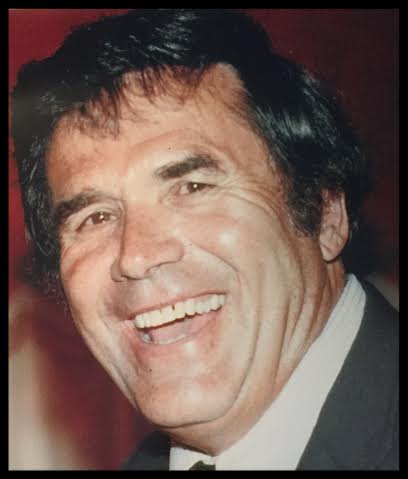
Last night I dreamt that I was walking in a big city with my father. My dad was a giant of a man – 6’4’’ – and you could always find him in a crowd. He had the long legs of a basketball player and it was hard to keep up with him – which always greatly annoyed my 5’4’’ mother. She spent a lot of their 52 years together looking at his backside – and bitching about how fast he walked.
When I look up “safe” in my dictionary, this picture pops up. My dad.
In my dream, we were suddenly separated, and I was surrounded by hundreds of strangers, all walking rapidly as if to catch a train. My heart was pounding, and I wanted to cry when I looked up far in the distance and saw my handsome father’s head towering above everyone else. I called out as loud as I could, “Dad,” over and over again until, finally, he turned and saw me. He smiled and waited as I ran towards him and into that magical feeling of being safe.
Do you remember that feeling? That moment when your breath stills to a whisper and you feel your feet firmly grounded. That moment when you can almost hear your heart humming. God, I miss those moments.
Most of us have been reeling in a maze of confusion and fear and a fair amount of anger the past month or so. My March certainly came in like a lion when a drugged-out guy in a van slammed into my car while I was sitting at a stoplight near RDU. It’s a cliché, but I never saw it coming. I suppose that’s often a blessing – in so many situations. Once the screeching and sound of crushing metal ceased, I heard a calm, sweet voice saying, “Are you okay?” The voice belonged to Dee – a lovely truck driver who was stopped next to me and saw the whole thing happen. She helped me out of my car on the passenger side and stayed with me until the EMTs and state trooper arrived.
It is not well with my Soul.
My car was totaled and I’m lucky I wasn’t seriously maimed – or worse. I did have some mega bruises on my left hip for a few weeks that looked like a map of the world. Oh, and the guy who hit me abandoned his vehicle – and one of his shoes – and ran away. So, I saw the best and worst of humanity that day – my dear highway guardian Dee who stopped her big rig to check on me and that guy that left me for dead. Moral to this story: Be like Dee.
I’m not exactly an optimist, but I did think that my car being totaled would be the worst thing that would happen in my life in the month of March. Again, such a blessing that we don’t see these things coming. Little did I know that the accident was just the opening act for the cancellation of a long-planned trip to the Holy Land and oh yeah, a global pandemic. Perspective can be a powerful thing.
Even though March was 137 days long, it feels so far away today. Gone are the days where we might have thought this was going to be okay in a few weeks. A week before my trip to Israel was cancelled, the United States reported 70 COVID-19 cases and the nation’s first death in Washington state. That was less than six weeks ago. Today, there are almost half a million cases and over 13,000 deaths. That hoax theory is not aging well, and neither am I. These days are long and the nights often longer.
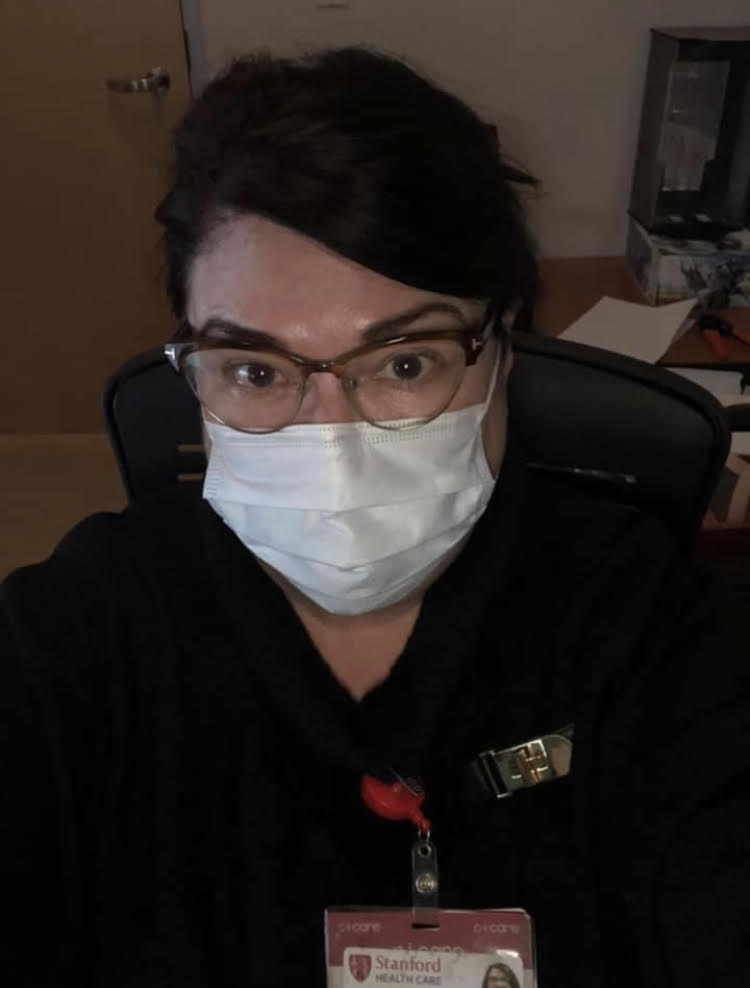
I spend a lot of time grieving. It’s a horrible new version of a celebrity parlor game – Six Degrees of COVID-19. Most of us know someone who has or had COVID-19 and each passing day, more of us will know someone who has died from the virus. And certainly, everyone knows someone who is on the front lines of caregiving in one way or another. For me, that is my dear sister who is the director of Stanford Healthcare’s oncology clinics in the East Bay California area. Weeks before COVID-19 was on the front burner here in North Carolina, my sister was warning me of how bad it was going to get. She has adapted exceptionally well to her strange new normal. She works long days – always gloved and masked – comes home and takes off her shoes on the front porch. She heads straight to her laundry room, undresses and throws her clothes in the washer before heading to the shower. Wash. Rinse. Repeat.
Just another day at the office. My sister.
She has a vulnerable respiratory system and I worry (understatement) about her, but her spirit is indomitable and when I speak with her on the phone every day, she makes me feel hopeful that we will get to the other side of this.
I spent a good chunk of my career working in public health to support people living with HIV/AIDS and I learned early on that people were more likely to care about a pandemic when it became personal to them. Every one of us will have a very personal COVID-19 story to share before this is over and we need to tell them in the ways that feel right to us. The dead deserve that. The helpers deserve that. The grieving deserve that, too.
Shelter in place is a phrase we keep hearing repeatedly and I find a disconnect in it. I understand the literal definition of the term, but there are days that I wrestle with it. Those are the days I feel angry and frustrated that I can’t seek shelter in the places that make me feel safe. Places like my church. This week is Holy Week – a sacred and somber week in Christianity as we recount the events leading up to Jesus’ crucifixion and Resurrection.
I am an Episcopalian and like many denominations we have special services on each day this week. About a decade ago, I was going through a dark crisis in my life and suffering deeply. The young intern at my church encouraged me to attend every service of Holy Week. I thought that sounded a little severe, but she suggested that the liturgy of Holy Week might speak to me in a deeper way if I was present at every service. I think she knew I was broken open enough to hear those words in a new way. She could not have been more right. (Disclaimer: Non-believers can bail on this post if this is too much Jesus for you. No hard feelings.) For the first time in my life, I saw my suffering in the suffering of Christ. I felt his wounds as my wounds and perhaps, most importantly, I experienced my resurrection in his. I felt whole again in a way I never had before.
Palm (weeds from our yard) Sunday, 2020. Let us Zoom.
Ever since then, I have attended Holy Week services, well, religiously. So, who knew we would have to give up church for Lent? The rector at my current church is young and cyber savvy and has done a remarkable job of creating online worship opportunities. Zoom is our sanctuary and it has been lovely to see the sweet faces of my community of faith. That said, I’m a cradle Episcopalian and I still feel uneasy wearing flip flops and a T-shirt to church. And I really miss the passing of the peace. At my church, this part of the service goes on for what must feel like an eternity for all the introverts in the parish. But what I miss most is communion – the sharing of the consecrated bread and wine. Without a doubt, this passage from The Book of Common Prayer is why I am an Episcopalian:
“We who are many are one body, because we all share on bread, one cup.”
Even as a child, I think my little bleeding liberal heart loved the idea that a pauper and a prince would drink from the same cup. I worry that COVID-19 might change this sacrament and that makes my heart ache.
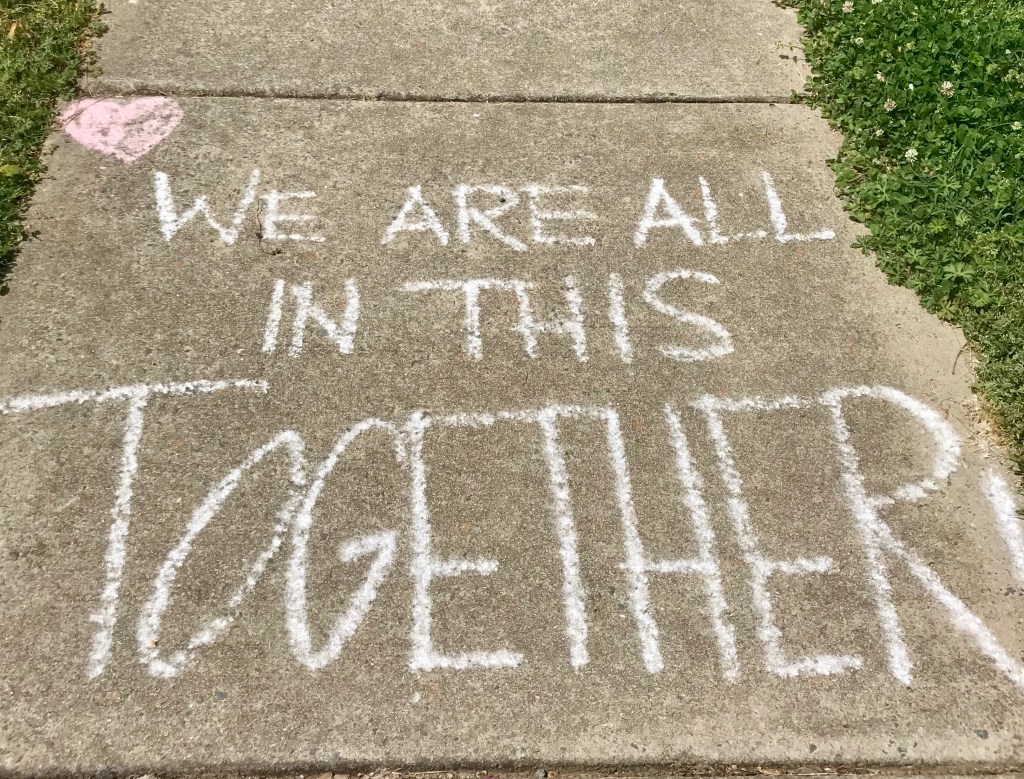
The truth is that a lot of things are never going to be quite the same again – and it’s okay to grieve that. Yes, we’re all in this together and the tsunami of gorgeous stories of people helping each other sustains us each day, but before this began, the fear of the other was a real one in our country. A global pandemic won’t help reduce that fear. Neither will government leadership that promotes xenophobia. Yes, the struggle is real and so is the anxiety.
Sidewalk inspiration.
As I stumble through the surreal wilderness of this Holy Week, I am most comforted by thoughts of a beautiful Seder my wife and I attended last year. We were in Washington, DC for the celebration of my most beloved mentor/friend/touchstone Phyllis’ 70th birthday. Her birthday was on Good Friday, which coincided with Passover. Phyllis’ cousin traditionally hosts a huge family Seder – tables and tables pushed together with attendees ranging from about 5 to 95. She graciously invited us as the fortunate chosen Gentiles.
Phyllis Freedman. My favorite Jew.
It had been a long time since I had been to a Seder, and I had never been to one so big or elaborate. As the evening began, we took turns reading the stories of the terrible plagues sent by God and inflicted upon Egypt in order to allow the Israelites to depart from slavery and their journey to freedom in Israel. I loved the symbolism and connection of the meal to the story – dipping hard-cooked eggs in salt water to remember the tears of the ancient Israelites and the sharp herbs representing the bitterness of slavery. It was deeply moving and well, I’m not going to lie – I am a big fan of Cousin Davida’s kugel.
The president keeps making the rather ridiculous observation that “America is just not built for this.” I suppose he means the shutdown that most of us are navigating, but I would guess he also means all the suffering this pandemic entails. I think that’s why I’ve been reminiscing about last year’s Seder and hearing – and perhaps understanding in a new way – the tremendous struggles that Jews have endured. I’m not saying that the Jews were built for this, but they surely can teach us a lot about resilience and dealing with despair.
The traditional Passover Seder ends with the Hebrew, “L’Shana Haba’ah B’Yerushalayim.” Next year in Jerusalem. This prayer finishes the Seder’s journey from a reminder of the suffering of the past to hopes for the wholeness and peace of the future.
Next year in Jerusalem. Whatever that might look like to you.
Wholeness. Peace. May it be so for each of us.
Meanwhile, I’m hoping to see that tall handsome man in my dreams again soon.
This post is dedicated to the late great John Prine who died from complications of COVID-19 on April 7, 2020. We’ll miss you like crazy, John.
Make me an angel that flies from Montgomery Make me a poster of an old rodeo Just give me one thing that I can hold on to To believe in this living is just a hard way to go









 Bookends