Voting as an open-hearted expression

Morning sunlight shining on shoreline and ocean
Photo by Carla Kucinski.

I was 10 weeks pregnant when I learned my baby’s heart was no longer beating. I felt like a robot as I got dressed, and then sat down on a round, leather stool with wheels. When the nurse practitioner walked into the ultrasound room, I broke down sobbing into her crisp lab coat as she held me. At the time, my doctor gave me three choices: 

  • Take a pill to help pass the fetal tissue
  • Let my body go through the natural process of passing the tissue on its own
  • Have a procedure called a D&C to remove the tissue and ensure the entire pregnancy is passed.

I went home that evening agonizing over which choice to make, while also grieving the loss of the baby. To me, there were no good options. Each one sounded horrible. If I chose the medication or the natural process, the thought of physically experiencing the baby’s tissue passing through my body felt unbearable to me, as well as the unpredictability of not knowing when it would happen—days or weeks—or where. I was terrified it would happen at work. And when I tried to imagine myself trying to go about my days carrying in my body the baby that was no longer living, I would sob. I didn’t think I could handle the emotional pain of that. I decided on the D&C. 

My doctor and her staff handled me with so much care and compassion. Even though I was mildly sedated, I was awake during the procedure, and I remember everything. But the image my mind always goes back to was the nurse who patted my right knee, smiled at me through her mask and kept checking in with me throughout the procedure. 

I was fortunate. It was 2016. I was given a choice, and I chose what was best for me emotionally, mentally and physically. I had access to good quality healthcare. I had a doctor who was trained in the procedure. I had a medical team who cared about me and supported me. 

Today, women are not as fortunate. In fact, I would say we are very unfortunate. Our choice has been taken away. 

A D&C is the same procedure used for abortions, but, as I’ve shared in my story, it can also be used when a woman has miscarried, or when medical complications arise for the patient during their pregnancy. For some women, the procedure is a matter of life or death. 

But since the overturn of Roe v. Wade and changes to state abortion bans, women’s lives and our health have been put at risk across our country. Women who are experiencing pregnancy complications are being denied medically necessary care because doctors fear losing their license, facing criminal charges, or hefty fines. A pregnancy may need to be terminated because the mother’s life is at risk, but if the baby still has a heartbeat, some states won’t allow termination. In some cases, it is becoming difficult to even find a physician in a medical practice or hospital trained to perform a D&C. 

As a result, women are turned away, sent home, forced to travels hours to a state that will give them the care they need and deserve, and live with longterm consequences to their reproductive health because of delayed treatment or no treatment. 

We deserve better. 

After my D&C, I got to go home and sleep on the couch with my dog and be taken care of by my husband. I can’t help but think how different my story might have been if that happened today.

As a licensed mental health counselor, I have worked with clients who have gone through traumatic pregnancy loss. Sometimes I have been the only safe person they have been able to share their story with. They had to make unimaginable decisions, oftentimes alone. I have sat with them as they sobbed, as they grieved, as they worked through their trauma. 

When I went to the polls last week, I carried with me, in my heart, these women’s stories and my own as I casted my ballot for Kamala Harris. My vote for Kamala was a vote for my clients, for the women in my life who I love dearly, for me, for all women—past, present, future. 

I believe Kamala will fight for us and protect us. I believe she will uphold our human right to make decisions about our own bodies. I believe the future of our healthcare system will be put into the capable and compassionate hands of Kamala and her cabinet. 

“Voting is an open-hearted expression of what we care about. Voting is evidence that what we do in this world matters. Voting enables us to participate in the outcome of our lives.” 

I read these words the other day by Sharon Salzberg, a meditation teacher I have been following for a few years. It resonated with me and captured my feelings about what it really means to me to vote. 

What I have shared here is an open-hearted expression of what I care about. It is evidence that what I do and you do in this world matters. 

I believe that if Kamala is not our next president, I will be sitting across from many more women in my therapy practice with more traumatic experiences, and I will be holding the hands of many more women in my personal life whose bodies, dignities, and lives will not be respected or protected. 

That is an outcome of our lives that I do not want. 

***

I got this tattoo a few weeks after my miscarriage to honor the loss and to remind myself to hold onto hope during times of uncertainty.

Eulogy for my dad

February 10, 2023

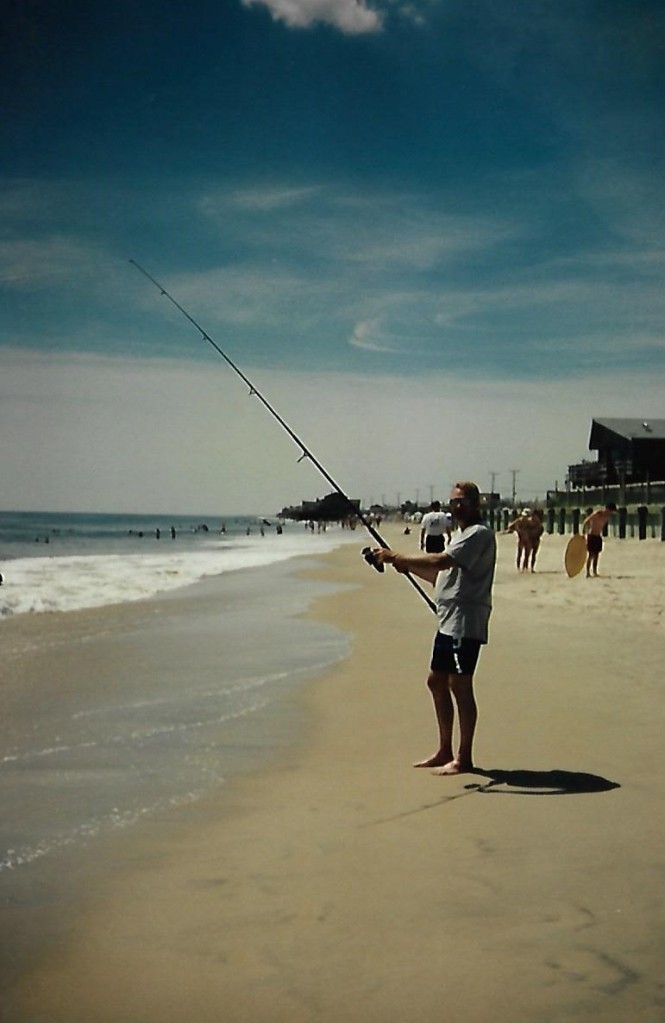
The sunrise was beautiful yesterday. It reminded me of all the early mornings I spent fishing with my dad at the beach when I was growing up. The night’s blue light was beginning to fade while the sun cast its first golden rays, creating brilliant hues of pink and orange across the sky. I paused in the street to take it all in. I could almost smell the ocean salt in the air.

I can still picture my dad standing at the shore a few feet away from me with his fishing pole, looking out across the vast ocean, content and at peace. Occasionally he’d look my way to check on me and would run to my side if he saw me struggling to reel in my catch. He’d let me believe I was doing the work, even though his strong hands were guiding mine. The pride I felt from him when I would catch a fish always made me feel like I could do anything.  

Those quiet mornings on the beach were special to me for so many reasons. My dad worked a lot to take care of the four of us, so any opportunity I had to spend one-on-one time with him felt like a gift. I was always looking for ways to connect with him and learn from him. Dad was a patient teacher and he got so much enjoyment from sharing with others the things he loved. Now, as an adult, I realize my dad was giving me more than just fishing lessons.  

My dad taught me how to truly be present in the moment and appreciate the beauty of nature and life, but most of all each other. He taught me that you didn’t have to talk to connect, that simply sharing space and being present with another person can be more powerful than words. Those values have shaped me and guided me in my life, especially these past few months.

Holding my dad’s hand.

Toward the end of my dad’s life, I saw so much of what he has given me reflected back to him through my own actions. Our time together became all about presence, patience, unconditional love and being in the moment. It was a cold washcloth on the head. Encouraging him and cheering him on when he walked 13 feet. Feeding him a spoonful of canned peaches. Playing his favorite music artists—Elvis, Jackson Browne, Sinatra—singing to him hoping he would remember the lyrics, dancing around the room to make him laugh. Wiping away his tears. Sitting next to him in bed just holding his hand in the quiet of his hospital room.  

I don’t think I truly knew what love was until my dad got sick.  

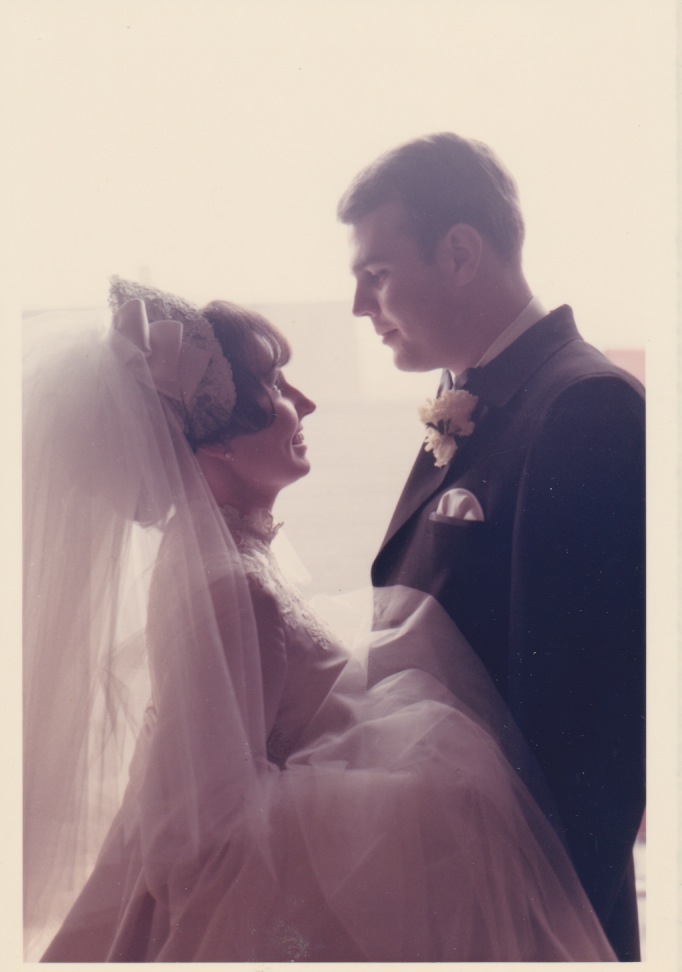
No one took better care of him than my mom. I always felt and saw the love between my parents. But it was so much more apparent these past few months. It was heartbreakingly beautiful to watch the tenderness between them. My dad lit up every time she walked into the room. “Hello, sweetheart,” he would beam. My dad was happiest when he was with my mom. He worried about her and always told me as I was leaving: “Take care of your mother.” He never stopped wanting to protect us.  

Mom and Dad, so in love.

My dad was my family’s anchor. A steady, constant, and loving presence in not just our lives, but everyone who had the pleasure of knowing him. He was selfless, always thinking of others. Even in the work he did, he always talked about taking care of his people. Throughout his career, he had to carry out layoffs and shutdowns of manufacturing plants, which weighed heavy on him. He did everything he could in his power to save peoples’ jobs and their families and delivered the difficult news with empathy and grace.  

He also had a wonderful sense of humor and a silly side. One time he auctioned off items from his closet to my sisters and I with real money. We never knew what we were bidding on because he would hide it behind his back and talk it up in a way that convinced us we had to have it. One of my sisters ended up with a tie rack. There were some tears when it was time to pay up and some of us didn’t have enough money in our piggy banks. I’m pretty sure I remember my mom yelling at him when she got home.  

My dad would get extra silly on Saturdays when he was in charge of taking care of us while my mom was at work. My sisters and I loved Saturdays with my dad. He made ordinary trips to the grocery store fun. The toilet paper aisle was our favorite. My dad would pause in front of the towers of Charmin and ask “Do we need toilet paper girls?” and we would provide an emphatic yes as my dad intentionally reached for the toilet paper at the bottom of the stack as we watched all the packages tumble to the floor in a heaping mess. Then he would nonchalantly exit the aisle with his shopping cart while saying “You girls better pick that up. You’re gonna get it.” Sometimes we’d laugh, other times we’d frantically and nervously put the toilet paper back on the shelf out of fear we’d get in trouble.  

Dad and his girls.

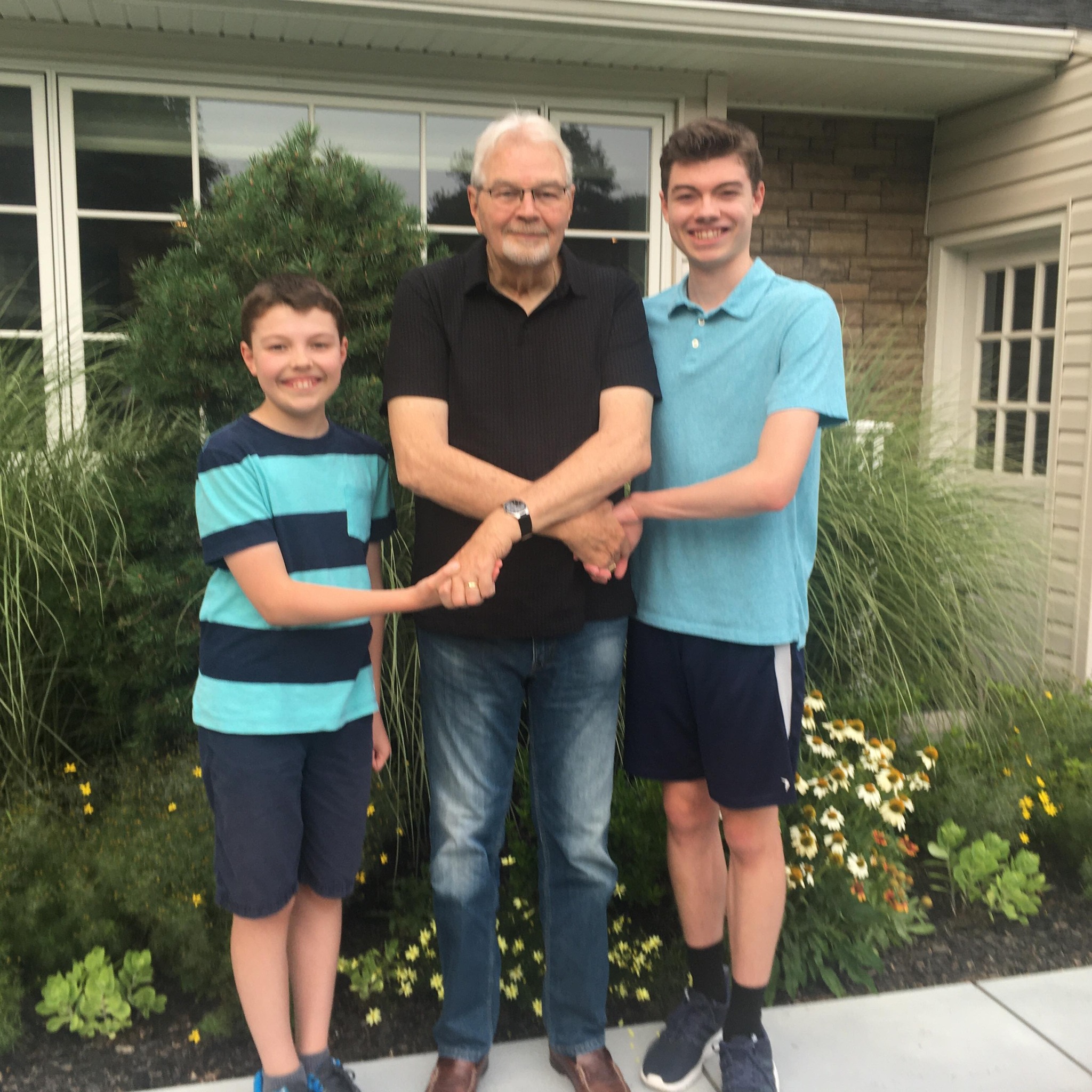
My dad told me once that being in the Navy taught him discipline. He said “You could withstand almost anything and get through it.” My dad was the strongest and bravest person I’ve ever known. He survived un-survivable things. His resiliency astonished everyone, even his doctors. Part of that may have come from the Navy, but I believe my dad’s strength was innate. That strength and all the other beautiful parts of him will live on in me, in my sister Gina, in my sister Amanda, and my dear nephews Aiden and Dylan. My dad said it perfectly: “We will continue on together.”  

Dad with his grandchildren.

The night my dad died, my family and I walked outside of Hospice House into the cold February air with broken hearts. I looked up and saw a full moon glowing brightly in the night sky. 

It made me think of years ago, after a tearful goodbye with my dad, a text he sent me as he was boarding his plane. It read:   

“The same moon that shines on you shines on me. Let’s stay connected.”  

**** 

Chester Stanley Kucinski, Jr.

February 18, 1947- February 6, 2023

Perhaps

Perhaps
By Carla Kucinski

On the last day of the year, a dense fog rolled in,
thick and hazy like a Whistler painting.
This day feels heavy,
the year’s final, long sigh—an exhale of the sorrow, the joy, the pain, the beauty.
Ahhhhh.
Tonight, I will go to sleep and lay to rest this heavy heart,
let go of the weight,
all that it has carried and endured.
Perhaps my head will be buzzing from the Moscow Mules I will sip with dear friend M,
counting down the New Year.
10, 9, 8, 7 …
Perhaps my heart will feel light like December’s first snowflakes—joyful, swirling.
Perhaps I will close my eyes and recognize that the lightness I feel is gratitude,
gratitude for it all—the darkness, the cracks of light—there is always light.
Perhaps everything has a purpose.
Perhaps next year will be easier—a break will come—
some peace will settle from the cloud of dust of 2018.
Perhaps I’m stronger than I think.
Perhaps this new year will feel like a warm blanket.
Perhaps that’s the beauty, the not knowing.
Perhaps, perhaps, perhaps …

***

IMG_4892 reduced

Photo by Carla Kucinski

I was born this way.

***

It is October. My health has been deteriorating, but I continue to operate at full throttle. This is all I know. This is my way of being for the past 38 years. I convince myself that I can still go through life the way I’ve always done, doing ALL the things, giving everything 110 percent—school, work, counseling, my friendships, my marriage—everything except me. I feel empowered. (I have no control.) I feel strong. (I am so tired.) I am kicking my lung disease’s ass. (It’s winning.)

Perfection and over-achievement, this is what I strive for. It’s also killing me. I am losing myself. Basic human necessities are becoming less of a priority. I am so amped up all the time that I stop noticing hunger cues to alert me to eat. When I do eat, I am so anxious that my body burns it up, hungry for nutrients. I eat trail mix for dinner. Every time I try to eat, I have a coughing fit. I cough so much that my trachea becomes inflamed and all I can eat for one week is chicken broth and vanilla Ensure shakes.

I drop 13 pounds in one month. I cry a lot on the couch in my husband’s arms.

***

My chronic illness this past year has felt like a tide pulling me in. Several times, I have felt like I am stuck in a rip current, treading water, fighting to keep my head above the ocean, my bare feet kicking furiously as I struggle to find solid ground. I felt like giving up so many times. I grew so tired and did not have an ounce of energy left in me. When I saw my new pulmonary doctor at UNC in late October, she asked me on a scale from 1-10 how I felt overall. I answered a solid two. Even my husband was surprised by my response. I’ve gotten good at faking appearances and keeping myself in denial about how sick I really am. “You don’t look sick,” people often say to me.

IMG_5305

Everything is always changing. That’s what my chronic lung disease has taught me. Just like how the tide rolls in and rolls out, so do the moments of our lives. Stuff happens. Sometimes things we don’t expect. Every day I wake up not knowing if it’s going to be a good breathing day or a bad breathing day. But this pattern of not knowing has helped me become more accepting of what is instead of how I think it should be. That’s not to say that on the days where I cough and wheeze for hours to the point where my bones feel like a rag doll that I don’t rage against the universe asking, “why is this happening?” or scream in frustration or cry in disappointment. Because I do.

Since my MAI diagnosis a little more than one year ago, there has been an ongoing tension between my lung diseases and me, a push and pull. This summer, every time I ran an extra mile or beat my previous time, it was like a big FUCK YOU to my chronic illness. I felt empowered. I felt in control. But when September came, and the fatigue drifted in like a dense morning fog, I started to feel like I was losing this fight again. By the fall, my illness began to pull me back to the sea and drag me under. I wasn’t expecting it. Allowing my doctor to hospitalize me in November felt like raising a little white flag, tattered and frayed. I surrender.

***

IMG_0906

I took this picture in October when I was too tired to leave my bed most of the weekend and wondered if I would ever feel “normal” again.

Late October. I have contracted another new, rare infection that is difficult to treat—and pronounce. It begins with an “S” followed by a train of many, many letters. My doctor’s words sound like white noise as she explains that I am “too young” and that we “need to be aggressive.” Over and over, I turn over in my hands the lavender Amethyst grounding stone I always carry with me to appointments. I hear “a couple of days” and “IV antibiotics” and something about a PICC line. She turns the computer screen toward me and points out the white puffs of cotton sprinkled throughout my left lung and the ominous black hole that is still visible one year later. “See this. I don’t like this,” she says, pointing with her index finger. She explains how we will work as a team and uses a beautiful metaphor of the both of us in a canoe rowing in unison in the same direction. She is my angel in a white lab coat. The doctor I have been waiting for. I am scared. I am in shock. But I believe in my heart that she will help pull me out of this rip tide and bring me to shore. She gives me hope.

***

That black hole on my CT image haunts me. Since my diagnosis a year ago, I often visualize what it looks like. When I run, I imagine that it’s shrinking in size. When I meditate, I think about transforming the blackness into a beautiful, white light with a purple ring of haze glowing around it. In my mind, I imagine my body healing itself.

IMG_4080

Lately, I’ve been thinking about a painting I came across one year ago on a December afternoon. Its image made me pause. Standing before this abstract piece felt like looking in a mirror. I saw myself, or rather, a part of myself: a blob of thick black paint with layers of gray underneath and surrounding it. It’s how I imagined the inner terrain of my damaged lungs, and the recent cavity that has formed due to my MAI. It looked like an abyss of blackness, a pit. I felt consumed by its size, its darkness. It brought me to tears. In my mind I could hear my doctor’s voice explaining to me the black, shadowy splotch on my CT scan three months prior, and how he described it as a ball of glue. As I stood there, I thought about when I had my aura read a few years ago and the image it produced of a splotch of darkness in the center of my chest. This was before I or my doctors knew what was happening inside my lungs, the disease that was beginning to colonize in my upper left lobes. As I studied the painting longer, I noticed that a light hue of pink the color of bubblegum revealed itself under the dark glob. I smiled recognizing this detail. To me, that color symbolizes hope, that underneath all the crap that life sometimes deals us, there’s always a shade of pink–if you look for it.

That pink hue is the raft I cling to when the tide tries to take me out. It is the line my loved one throws me when I feel I cannot tread water any longer. It is the fire burning in my belly that I inherited from all my ancestors that came before me, who were tough as nails. It’s what pushes me every day to get out of bed and face whatever may come. That is the great victory. I am resilient because like Lady Gaga I was born this way. I am resilient because that’s who my family is. I am resilient because I watched my family overcome impossible things. My grandfather fought in and survived two wars, numerous floods, and lived to be 97-years-old. 97! My grandmother came to America thousands and thousands of miles on a boat as a young girl with her mother and siblings and built a new life and a family in a little coal mining town in Pennsylvania. She worked in a factory, became a young widow and lost one of her breasts to cancer. My mom quit decades of alcohol abuse on her own, cold turkey, and possesses an unbelievable drive and strength. She is always everyone else’s rock, including mine. My dad survived an aortic dissection, that statistics show he should not have outlived. He flat-lined during his emergency surgery and slipped into unconsciousness afterwards, and yet he is still on this earth with us cracking jokes and doling out wisdom to his three daughters. That’s what my family does. We carry on. They are survivors, and so am I.

UNC Hospital

Feeling mighty at UNC Hospital after making it through my first PICC line insertion.

***

Let go or be dragged

Bear small

What it feels like sometimes to have a chronic illness.

This blog has always been a place of healing for me. You, dear readers, have contributed to creating this safe sanctuary with your comments and stories, sharing your hearts, your struggles and your fears. Vulnerability breeds vulnerability. But for these past few months, hitting the publish button on WordPress has been a terrifying idea for me. To share what has really been going on in my life comes with risk, mostly the fear that I will invite in pity and that no one would understand.

What has pushed me to finally tell my story here is my frustration over the last few months of the lack of personal stories around chronic illness, particularly young adults living with chronic illness. In other words, stories like mine.

As a lover of non-fiction and memoir, I have listened to, watched and read accounts of people’s chronic illness experiences, mostly about those who are living with and/or survived cancer. I turned to others’ stories of sickness to try to understand mine. I longed to find stories that helped me connect with someone else who might be going through/or have experienced similar challenges. I found some nuggets of comfort in their stories, points of relating, but I have since come to realize that every person’s story is unique, and so is mine, and it is one worth telling.

During this past summer, my health was relatively stable, and I started to feel like I was getting my life back and getting ME back. I was running again for the first time in years and I cannot tell you how good it felt to reclaim that. I felt normal again–hopeful. I ran 4.8 miles in a relay race and signed up for my first 10K. I spent the rest of my summer training for my 10K in September—the 10K that never happened.

Me running small

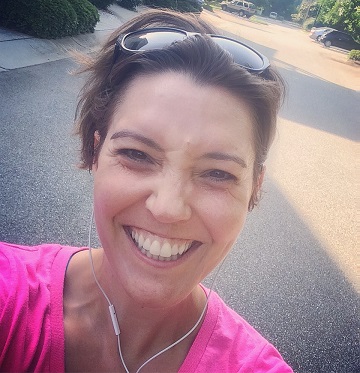
Me over the summer when I was back to running and feeling strong and on top of the world. 

For the past month, my chronic illness has flared because of a virus that I contracted. Over these past few weeks, I’ve been re-experiencing what it’s like to have a chronic illness rob me of big things like my identity and little things like cooking dinner. Anger and frustration have been building inside of me. I feel like I have control over nothing and it scares the hell out of me. While these emotions don’t always feel good, they’re fueling me to feel more empowered in this mess and not be afraid to use my voice to share my story and also advocate for myself in a healthcare system that downright just sucks.

***

Chronic illness can be a lonely journey. Throughout mine, I have often felt that no one could understand what I was experiencing, and so I isolated myself. Beyond my immediate family, only a handful of my close friends know about my illness. I coped by not talking about it. When you say things out loud it feels too real. I no longer want to stay silent.

Over the summer, I finished reading Natalie Goldberg’s latest memoir about her journey with cancer: “Let the Whole Thundering World Come Home.” In the preface, she writes “a writer has a second chance to digest experience.” For me, writing has always helped me make sense of the world, process what feels unexplainable and painful. But for the last nine months or so, I have been so immersed in my health that I no longer had the energy to digest my experience. It was easier to shut down and numb out. All my strength was poured into grad school, doctor’s appointments and medication changes. I fell into my default mode of pushing through. During that time, the pages of my writing notebook and journal sat mostly blank, except for some random entries about doctor’s visits or quotes that moved me. It wasn’t until May that I cracked open my notebook again while lounging on the beach listening to the constant calm of the sea and trying to make sense of the past year. It felt equally freeing and scary to put words to paper and face those difficult emotions.

The thing I wanted to write about, the thing that had become a constant presence in my life since August, I have been most afraid to write about. To write about anything else would have felt false, inauthentic, which is why you haven’t heard much from me in the last year on this blog.

There is a Zen proverb “let go or be dragged.” Writing about my illness has been part of my grieving process and has helped me accept what is and let go of what was. And yet I’m constantly being reminded that the grieving process is never linear, and I find myself these days revisiting the stages of grief that I thought I was done visiting.

Holding on to the past keeps me stuck in my suffering. Writing has always been my therapeutic release. Lately, I have been writing just for me, but now I feel called to share it because I hope my story may help others in their chronic illness journey, but also because selfishly I need to share it for my own healing.

***

Pills small

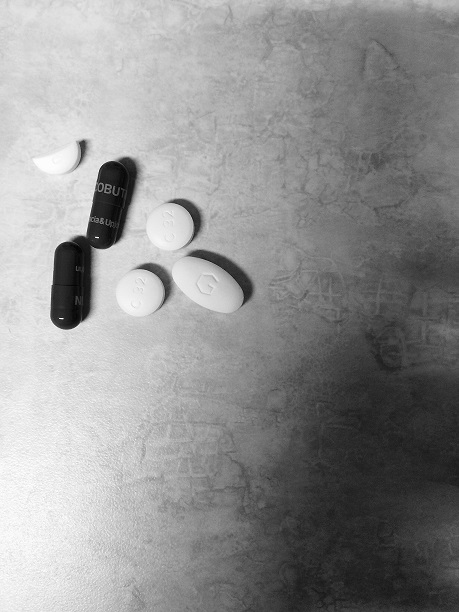
This is the first picture I took of the regimen of pills I was first prescribed bc I’m weird like that and like to document things. :p This photo was taken in Sept. 2017. Since then, my medication has morphed into four different medications totaling close to 3,000 mg a day. 

Every new diagnosis comes with grief—a loss of health, a loss of normalcy, frustration, anger, fear, anxiety, sadness. Just when my health reaches a period of stability, it seems something else is positioned in the wings, waiting to reveal itself. Chronic illness has the worst timing.

Barely a few weeks into my first year of grad school, I was diagnosed with Mycobacterium avium intracellulare, or MAI, a rare and serious lung infection. MAI is an atypical nontuberculosis germ that lives in the environment. It is not contagious. However, it is difficult to treat because the bacteria is slow-growing and thus it takes longer to eradicate. Treatment is further complicated if the infection has formed in the cavity of the lung, making it difficult for the medicine to reach the infection, and putting a patient at higher risk of permanent lung damage. It is a lifetime disease with a 40 percent reinfection rate, which is a high and sobering statistic. I, unfortunately, contracted the cavitary type. This also means that for the past year, I’ve been on a regimen of nearly 3,000 mg of antibiotics daily—three different oral medications and one inhaled. In addition, I take eight different supplements daily to counteract the effects of my drugs and my disease.

My MAI diagnosis in September 2017 marked my fourth confirmed lung disease at age 37. Living with this disease in addition to three previously diagnosed lung diseases, one of which is in remission, has been an exhausting and tumultuous journey that has turned my life and my family’s life upside down. Having lung disease often feels like having the flu—you lose your appetite, your muscle aches, your body feels weak and tired. And one of the most frustrating parts is that you never know when it’s going to strike, and you have to spend the weekend in bed.

Sick small

Nurse Molly at the ready when I am not feeling well. 

***

My health history is like a domino effect. Nothing lives in isolation. One disease breeds another disease breeds another disease. Between 2011 and 2017, I had a few periods where my health felt stable. But every day I lived in constant fear that I’d have a flare up or some new and rare illness would surface. That anxiety has never left me.

“You can feel the pain, but suffering is when you want it to be different, when you want to be a horse instead of a donkey, an éclair instead of a slice of bread. Suffering is when you want the pain to stop,” writes Natalie Goldberg in “Old Friend From Far Away,” a beloved book I often find myself returning to. …

I want to be the horse. …

I want to be the éclair. …

***